ACP, Acrylic or LED: Choosing the Right Shop Front Board
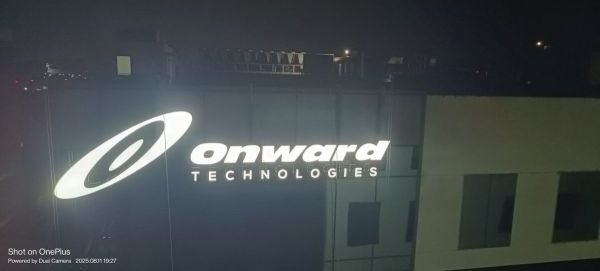
"Should I get an ACP board or an LED board?" is the question we are asked most often, and it contains a small confusion: ACP is a material, LED is a lighting method, and a great many shop boards are both. What actually needs deciding is the board face, the letter type and whether it lights up — three separate choices.
Start with the three real decisions
- The base board — usually ACP, sometimes acrylic, occasionally flex for temporary work
- The letters — vinyl, flat acrylic, 3D acrylic, or fabricated metal channel letters
- The lighting — none, front-lit, backlit, or halo-lit
Most of what people call "an LED board" is an ACP base board with 3D acrylic letters lit from inside. It is the most common shop front in Chennai for good reasons, but it is not the right answer for every business.
ACP as a base board
Aluminium composite panel is two thin aluminium sheets bonded to a polyethylene core. It is rust-proof, holds a dead-flat surface across a wide span, takes a factory coating that survives sun and rain, and can be routed and folded into clean edges. For a permanent exterior board it is the sensible default.
The grade matters more than the material name. Aluminium skin thickness is the number to ask about, and a PVDF coating holds colour better outdoors than polyester. A cheap panel on a south-facing frontage will chalk and fade years before a good one.
Choose ACP when: the board is outdoors, permanent, and needs to look professional in daylight as well as at night.
Acrylic
Acrylic reads as more premium than ACP because it has depth — light passes into it and edges catch it. Cast acrylic holds UV-stable colour for years and polishes to a glass-like edge, which is why it dominates 3D letters and interior signage.
It costs more, it is heavier in thick sections, and large single acrylic panels get expensive quickly. Most boards use it where it earns its cost — the letters and logo — over an ACP base rather than as a whole facade.
Choose acrylic when: the finish matters more than the cost per square foot — receptions, clinics, boutiques, offices, and the lettering on any board.
Backlit boards
A backlit board puts the LEDs behind a translucent face so the whole surface glows, rather than lighting individual letters. It is the strongest night-time presence you can buy, and it hides all the hardware.
It has to be built with enough depth for the light to spread, or it hot-spots — visible bright patches where each module sits. That is the failure mode to watch for, and it is a fabrication decision, not a materials one.
Choose backlit when: most of your footfall arrives after dark — restaurants, pharmacies, supermarkets, clinics, textile showrooms.
Channel letters
Individually fabricated three-dimensional letters, each with its own lighting, mounted directly to the wall or onto a concealed raceway. No board behind them at all. This is what banks, car showrooms and mall anchors use, and it reads as permanent and expensive because it is both.
Practical advantages beyond the look: each letter is serviced independently, a single failure does not take out the whole sign, and letters can be sized properly for a large facade without needing a board wide enough to hold them.
Choose channel letters when: the frontage is large, the brand is the point, and the budget allows.
Flex
Printed flex stretched over a frame is the cheapest illuminated option, and for short-term use it is genuinely the right one — a promotion, an event, a temporary premises, a very large format where acrylic would be prohibitive.
For a permanent shop front in Chennai it is a false economy. It fades, it sags, and it usually needs replacing within a year or two, by which time it has cost more than the ACP board would have.
Choose flex when: the board is temporary, or very large and the budget is fixed.
Side by side
| Option | Relative cost | Night visibility | Typical outdoor life |
|---|---|---|---|
| Flex board | Lowest | Fair, if lit | 1–2 years |
| ACP + vinyl letters | Low | None unless spot-lit | 8–10 years |
| ACP + 3D acrylic LED letters | Medium | Very good | 8–10 years |
| Backlit acrylic board | Medium–high | Excellent | 8–10 years |
| Channel letters | Highest | Excellent | 10+ years |
Lifespans assume a treated framework, a correctly rated power supply and proper sealing. Those three decide durability far more than the visible face does.
Matching the choice to the business
- Retail shop, trading into the evening — ACP base with 3D acrylic LED letters
- Restaurant, café or pharmacy — backlit, for the strongest after-dark presence
- Clinic or office closing by evening — ACP or acrylic, non-illuminated, spend the saving on finish
- Showroom or corporate building — channel letters, sized for the viewing distance
- Set back from the road — a pylon sign at the boundary matters more than the frontage board
- Short-term or promotional — flex
One thing worth deciding early
Whether the board will ever be illuminated. Lighting changes the depth of the board, the framework and the cable route, so adding it later usually means rebuilding rather than retrofitting. If there is a reasonable chance you will want light within a few years, it is considerably cheaper to build for it now and fit the modules when you are ready.
Frequently Asked Questions
Which sign board is best for a shop in Chennai?
For most retail shops, an ACP base board with 3D acrylic LED letters is the best balance — weather-proof, premium looking, readable at night, and repairable letter by letter. Businesses that trade mainly after dark do better with a fully backlit board. Offices and clinics that close by evening often need no illumination at all.
Is an LED board more expensive to run than a normal board?
No. A typical illuminated shop board draws roughly what a couple of ceiling fans do. Running cost is rarely a reason to leave a board unlit during trading hours; the meaningful cost difference is in fabrication, not electricity.
How long does each type of sign board last?
A well-built ACP or acrylic board typically lasts 8–10 years outdoors in Chennai. Quality LED modules run 50,000+ hours, roughly 8–10 years of nightly use. Flex boards usually fade within one to two years. Lifespan is decided far more by the framework, the sealing and the power supply than by the visible face.
Can I upgrade a plain board to an illuminated one later?
Sometimes, but it is rarely economical. Illumination affects the depth of the board, the framework and the cabling route, so retrofitting usually means rebuilding. If lighting is a possibility within a few years, it is cheaper to build for it now even if the LEDs are fitted later.
Want This Applied to Your Own Shop Front?
We survey, measure and quote free of charge across Chennai, Kanchipuram, Chengalpattu and Tiruvallur — with an itemised quotation you can compare properly against any other.
Read Next
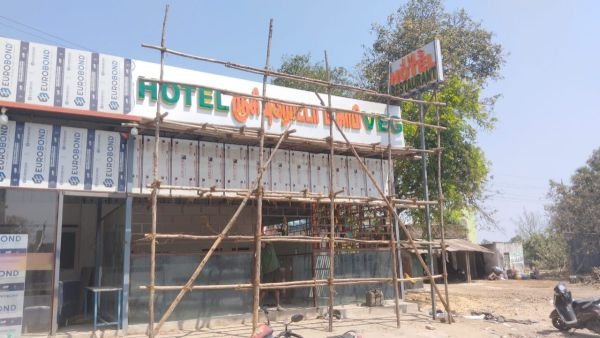
What Does a Sign Board Cost in Chennai?
Per square foot is the standard unit, but two quotes at the same rate can mean very different boards. Here is what actually sits behind the number.
Read the guide → 7 min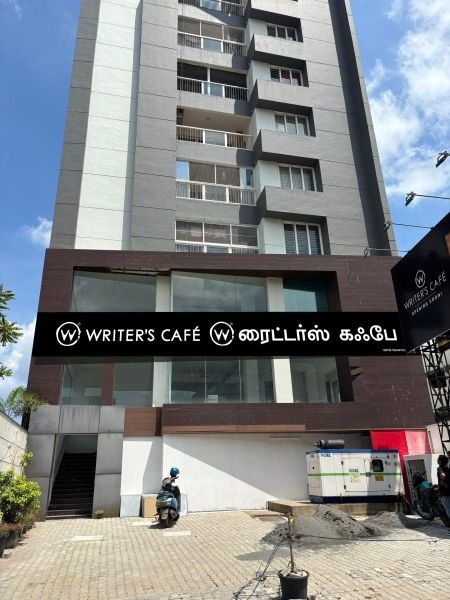
Shop Sign Board Rules in Chennai: What to Check Before You Order
A board that has to come down after installation is the most expensive board there is. Five things worth confirming before fabrication starts.
Read the guide → 6 min
Why Sign Boards Fail in Chennai's Climate — and How to Specify Against It
Boards here rarely fail because the face wore out. They fail at the fixings, the sealing and the power supply — all of which are invisible when you approve a quote.
Read the guide → 7 min